China’s AI Classrooms: A Look at the Future of Personalized Learning
Explore how China is transforming education with fully AI-powered smart classrooms. Learn how intelligent desks, real-time learning analytics, emotion recognition, and personalized digital lessons are reshaping student learning and redefining the future of education.
11/29/20254 min read
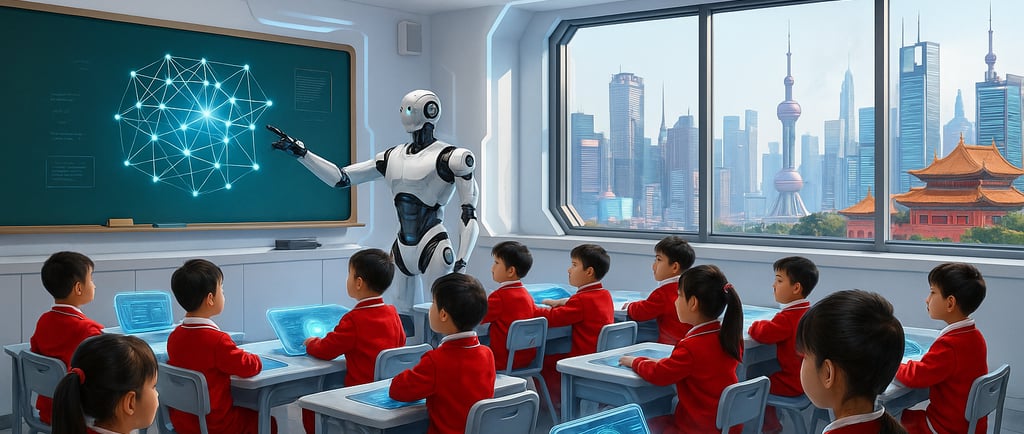
China has been rapidly transforming its education system through the use of advanced artificial intelligence, creating classroom environments that feel more like futuristic learning labs than traditional schools. At the center of this transformation are AI-powered smart desks, behavior-tracking systems, and real-time learning dashboards that work together to personalize instruction for every student. Unlike typical technology used in schools today, China’s approach fully integrates AI into the daily learning experience. This allows teachers to understand engagement, behavior, and progress in ways that simply weren’t possible before. For teachers in both rural and urban settings around the world, this offers a glimpse into what the future of personalized learning could look like, and it is astonishing.
See also: 5 Simple AI Tools Every Rural Teacher Can Use (Even with Limited Tech)
One of the most fascinating innovations is the AI smart desk. These are not regular desks at all, but rather touchscreen workstations built directly into the furniture. Students interact with lessons by writing, drawing, dragging objects, and watching short instructional videos. The desk analyzes each student’s work, offering hints when they struggle and increasing difficulty when they excel. Every child receives assignments tailored to their individual needs, even if forty students are learning inside the same room. Teachers no longer have to guess who understands a lesson and who doesn’t; each desk sends performance data straight to the teacher’s dashboard, showing progress in real time.
Behavior and engagement tracking are also central to China’s AI classrooms. Cameras and sensors installed in these rooms monitor posture, eye movement, head position, and signs of distraction. Instead of waiting for behavior issues to build, teachers receive alerts when a student begins losing focus. This allows for earlier interventions, calmer redirections, and fewer disruptions throughout the day. The system also records long-term engagement trends, helping teachers identify which times of day are more challenging or which subjects cause more frustration for certain students. It creates a level of awareness that would be impossible for one teacher to maintain alone.
AI also helps reduce teacher workload through instant feedback and automated grading. When a student completes an assignment, the smart desk evaluates the work immediately, explaining mistakes, offering extra practice, or providing enrichment material for students who finish early. This eliminates the long delays students often experience when waiting for graded work to return. It also frees teachers from hours of marking papers, allowing them to spend more time building relationships, planning creative lessons, and supporting students individually rather than drowning in administrative tasks.
Another major advantage of these AI classrooms is the ability to create fully personalized learning paths. The AI system automatically adjusts reading levels, pacing, and difficulty based on each student’s performance. Struggling learners receive extra support while advanced learners move ahead without being held back by the rest of the class. For students with diverse learning needs, English learners, or children who experience anxiety around traditional instruction, this level of personalization can drastically improve engagement and confidence. Teachers are no longer responsible for creating dozens of differentiated assignments by hand. The AI generates adaptive practice and recommendations on its own, saving enormous amounts of time every week.
Parents are also deeply involved in this model of schooling because most AI classrooms in China sync with mobile apps. Families can check daily progress, view behavior trends, review assignments, and see areas where their child may be struggling. Whether this level of monitoring is a positive or negative depends on perspective, but it undeniably increases communication and transparency. Parents who may not have time to attend conferences or monitor homework can still understand what their child is doing each day and how well they are performing.
Of course, China’s approach raises serious questions about privacy and ethics. With cameras tracking behavior and AI collecting large amounts of data, there are ongoing concerns about surveillance and how information might be stored or used. Critics argue that emotional analysis technology can be inaccurate, potentially mislabeling normal behaviors as problems. Others worry that students may feel they are constantly being watched, which could create stress or pressure in the classroom. These concerns explain why similar systems have not yet been widely adopted in the United States, where privacy laws and cultural expectations around student autonomy are much stricter.
Even with these concerns, many experts believe a moderated version of China’s system may eventually reach the U.S. and other countries. Some components already exist in American schools on a smaller scale. AI lesson generators like Magic School AI help teachers write individualized plans within minutes. Tools like Classroom Q assist with managing student help requests. Lightspeed monitors student device activity. ClassDojo tracks behavior and motivates students through rewards. What China is doing differently is connecting all these tools into one unified ecosystem, allowing data to move seamlessly between teachers, students, and parents.
China’s AI classrooms show what is possible when technology is used to personalize learning at scale. Teachers gain deeper insight into student needs, students engage in highly adaptive lessons, and parents receive more information than ever before. While privacy concerns must be taken seriously, the potential benefits less stress for teachers, more targeted support for students, and a more efficient classroom environment—are impossible to ignore. Whether global education systems choose to adopt similar technology or adapt it in a more privacy-conscious way, it is clear that AI will play a major role in shaping the future of teaching and learning. For now, China provides the clearest preview of what that future might look like.
Contact
Get in touch
Subscribe
info@teacheraidaily.com
© 2025. All rights reserved.